
Brutiful
Moon tremors and saltwater bones

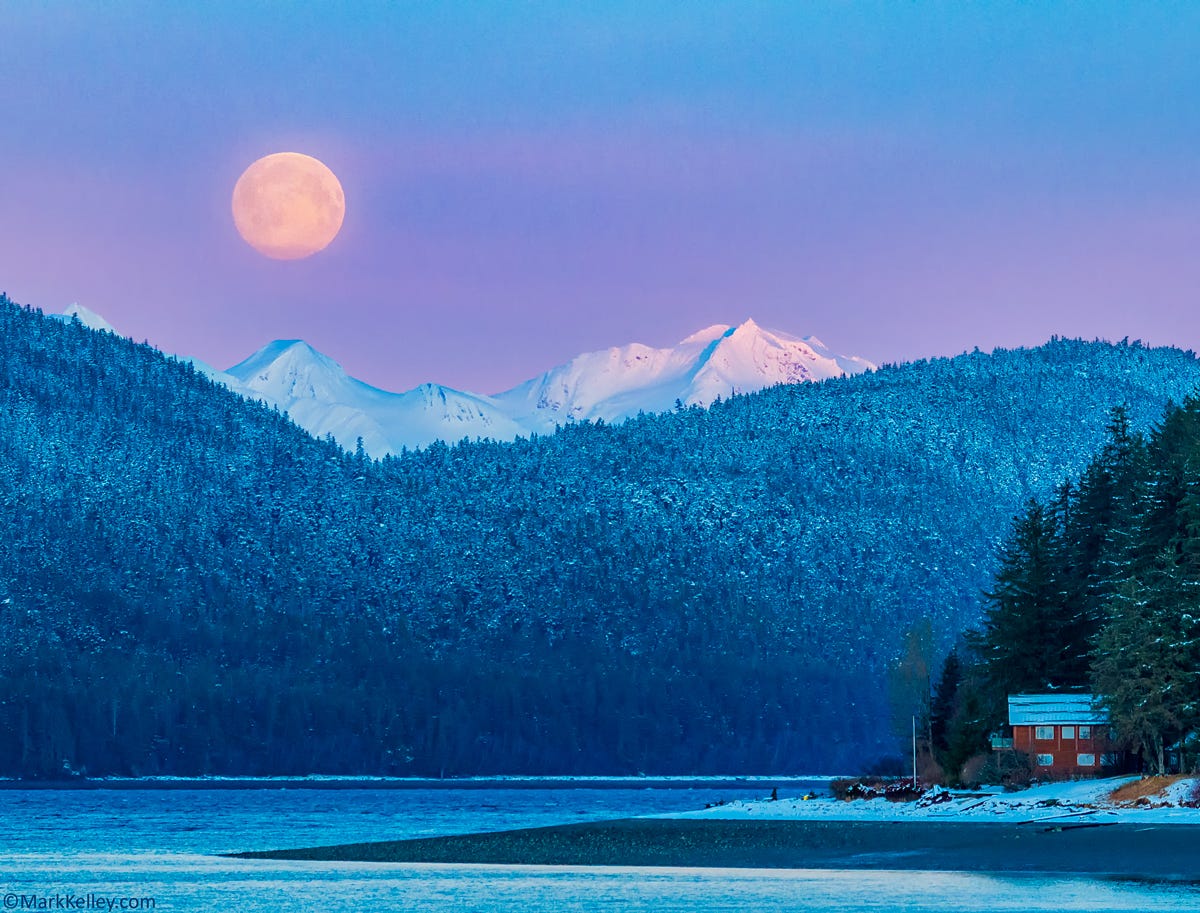
Last week, my body was shaking so badly, I thought I had Parkinson’s. I was vibrating at such a frequency that I wasn’t sure if I needed to go to the doctor.
A few friends were recently diagnosed with Parkinson’s. “Maybe it’s all the chemicals in the food,” they said. Microplastics.
“Polar plunges help.”
Did I need to submerge myself in Auke Bay?

It was the dog that made me smash my finger. When it jumped out of the car, I slammed the door to keep her in. The dog escaped, and so did my finger—right into the door.
Then, last weekend, we had a hell of a storm. Two days totally snowed in, and more than a foot of snow. We lost power, and since we don’t have a secondary heat source, the house got cold. The kids and I moved into my parents’ house for the night.
Monday, the temps dropped into the single digits, followed by more power outages. We struggled to stay warm. Frozen car doors. Frozen mailboxes. Ice everywhere. Living in Alaska is not for the broken. My husband was gone on a work trip. But at least it stopped snowing, and I didn’t have to shovel.
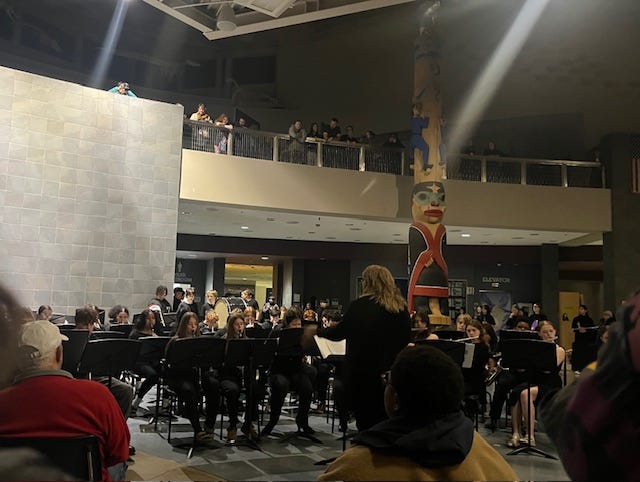
Tuesday, I watched my son’s concert at the school with minimal lighting, powered by generators. It felt very apocalyptic, all of us walking toward a big building in the dark, but there was enough light to have a concert in the atrium.
It was lovely.
I guess I should be grateful for the drama. When I was young, my life was so quiet and boring. I pretended I was on a TV show called “Just the Weather” because weather was the only thing that offered any conflict. Now all we have is weather—too much of it.
In Spanish, the word for “brutal” is written the same as in English. Pronounced “broo-TAHL,” with emphasis on the tal, it is spoken with reverence. Like the fire erupting from Mount Kilauea.
“Woah, you had a middle school concert with the power out in the atrium and the acoustics were even better? ¡Qué brutal!”
When I got home, we lost power again and my house was 50 degrees. I wondered if we would have to sleep in the car. Power returned, then went out again in the middle of the night, and I had nightmares about everything breaking.

I went to Urgent Care for my finger.
“It’s the super moon,” the doctor said. “That’s why you’re shaking.”
A doctor who trained with Western medicine, who has learned to treat the visible signs, to fix what is broken, not to search for the hidden roots. But she grew up on a farm, so I’m sure she understands roots and other hidden things.
And why wouldn’t it be the supermoon? Due to its proximity to Earth and gravitational pull, supermoons trigger massive tides. Earthquakes and tsunamis often follow, although scientists insist there is no correlation.
Well sho ‘nuff, a massive earthquake hit Alaska right after, followed by an aftershock the next day. My friend at the pool watched the water slosh around. Hours later, tsunami warnings were issued across Japan.
If supermoons can manipulate oceans—salt and water—and possibly even raise the earth, is it so far-fetched to believe that they could also manipulate humans? Are we not also made of salt, water, and stardust?
And now Mt. Kilauea is erupting.
What I love about living in Alaska is our connection to nature. Wildness. My menstrual cycle synced with the moon’s a long time ago.
I can’t sleep on a full moon even when it’s cloudy. Winter moons are the most potent. The Tlingit have a name for the full moon of winter: shanax dis, which translates to “growing hair on seals unborn.”
Often, this natural connection is at odds with the capitalist culture we are also bound to. The two are constantly at conflict: wilderness and capitalism, the pull to go feral, colliding against colonial time that refuses to slow down or hibernate.
That tension, coupled with the darkness and cold, can be really hard on everyone’s mental health. There’s a reason that Alaska has four times the national average of suicide.
Yesterday, one of my students had a full-on anxiety attack. He couldn’t catch his breath, head rocking back and forth. The teacher excused him to go relax in the counselor’s room, but he chose to come into mine instead.
I took that as a good sign—to do what I always do: teach Spanish, but gently. With love. Good vibes. Laughter.
We played games for most of the period. They think I’m teaching them Spanish, but really I’m just trying to make them smile.
Maybe that’s all any of us can do—find ways to be gentle with each other while nature pulls at our saltwater bones.
Yours, loosely,
Summer xo
P.S. If this resonated with you, please consider upgrading to a paid subscription. I keep most of my work free because I believe these ideas should reach as many people as possible, but I can only keep writing if some readers choose to support it. Your subscription helps me keep showing up.
We pretend to be so advanced and rational while we worship technology that makes us sick. But nature has this way of pulling us back into our deep roots in the soil, the water, the air. The feral will prevail when our tech has withered away because it is so emotionally and spiritually unfulfilling.
Nature is utterly amazing not just its physical appearances and climate changes throughout the seasons, but how it effects our internal selves, our psyche. I was intrigued by your docs answer to your shaking being the December full moon.